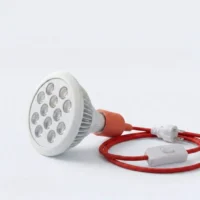
How to start: Hold it 4–6 inches from the skin. 10–20 seconds per spot, three to five times a week. It's strong up close, so a little goes a long way.
Raising slowly: After a week or two, add a few seconds per spot. More is not automatically better. Moving back gives a wider, lighter dose (see Light Density).
If it feels like too much: Skin too warm or flushed, or feeling wired after a late session? Move back, shorten the time, or skip a day.
Practical notes: You won't see the 850 nm infrared, so let warmth, not brightness, be your guide. Close your eyes on your face; don't look into the LEDs. Keep it dry and don't cover it while on.
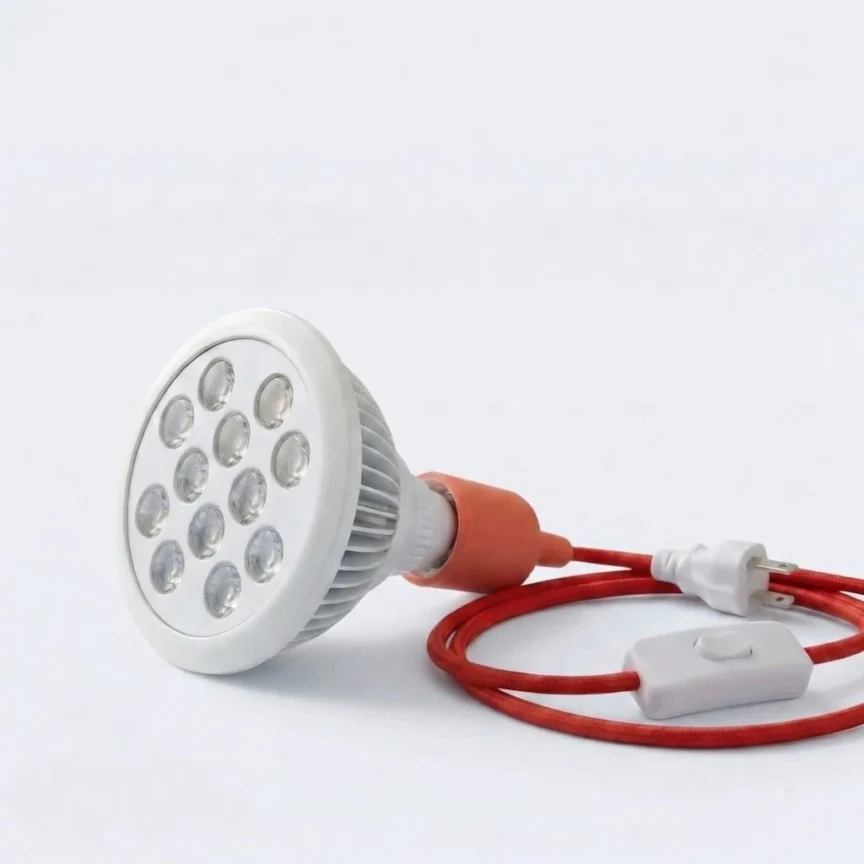
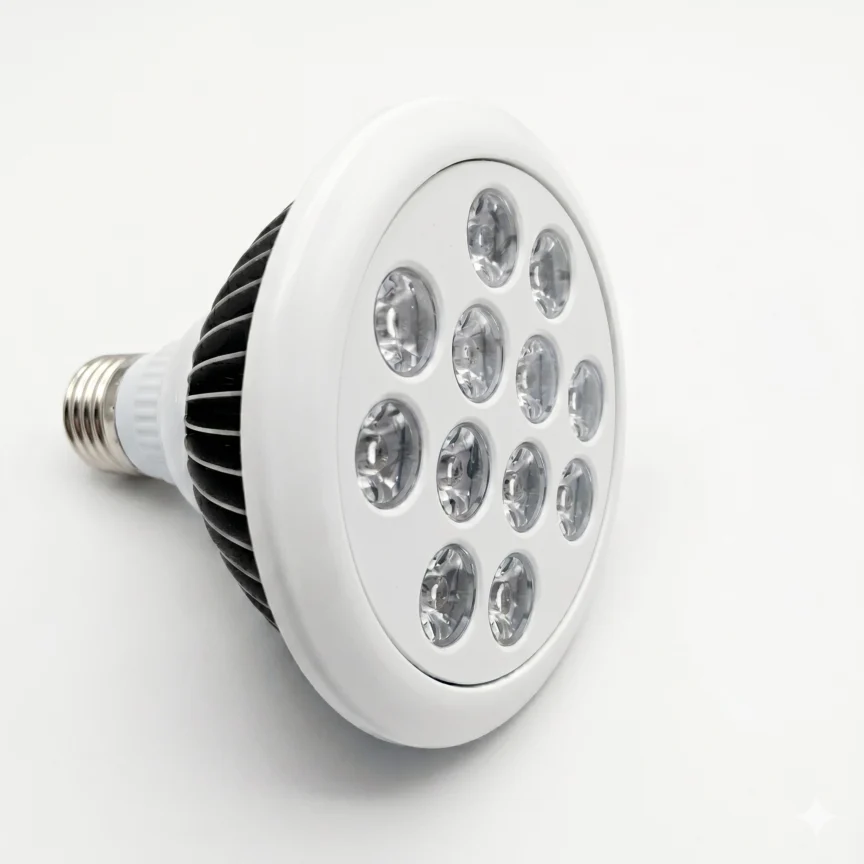
660 nm red, 50% · 850 nm near-infrared, 50%. No blue. Draws 14.8 watts. Worldwide voltage.
300 mW/cm² at 0 inches
100 mW/cm² at 7 inches
50 mW/cm² at 14 inches
25 mW/cm² at 22 inches
10 mW/cm² at 34 inches
Closer is stronger. Farther is a wider, lighter dose. The light draws 14.8 watts.
How close do I hold it? 4–6 inches to start. See Light Density.
How long? 10–20 seconds a spot, three to five times a week. Build slowly. Too warm is the sign to back off.
Why red and infrared together? Red works at the skin you can see; near-infrared reaches farther in. Half and half covers both.
Why can't I see all of it? 850 nm is near-infrared, past what the eye sees. It's on whenever the light is on.
Which plug? US/Canada/Mexico, Europe, UK, or Australia. Worldwide voltage.
Panel or handheld? This is a spot light. A pod or panel covers more at once.
Near-infrared at 850 nm is studied as a signal to cytochrome c oxidase, the enzyme at the last step of how cells make energy.
Pruitt T, Carter C, Wang X, Wu A, Liu H (2022). Photobiomodulation at Different Wavelengths Boosts Mitochondrial Redox Metabolism and Hemoglobin Oxygenation: Lasers vs. Light-Emitting Diodes In Vivo. Metabolites 12(2):103. PMID 35208178. On the human forearm, 850 nm light raised oxidized cytochrome c oxidase, a marker of cellular energy activity.
Bioenergetic view: A metabolism that keeps up makes everyday energy easier to come by. Red you see and infrared you feel, warm and quiet, is one way people support that.
Note: This study used lab light sources on the forearm, not this light. Educational only; not intended to diagnose, treat, cure, or prevent any disease.
Not a medical device. Do not use it to treat a condition.
Do not look straight into the light. Do not use it on broken skin, or if the skin is already hot or burned.
Stop if a spot gets uncomfortably warm.
Keep away from water and from children. Unplug it when you are done.
Near-infrared is invisible, so the light is stronger than it looks.
Talk with your healthcare provider before use if you are pregnant, sensitive to light, or take medication that makes you sensitive to light.
These statements have not been evaluated by the Food and Drug Administration. This product is not intended to diagnose, treat, cure, or prevent any disease.
Fresher, smoother, younger-looking skin on face, neck, and hands, plus recovery support after workouts, long days, and hard work.
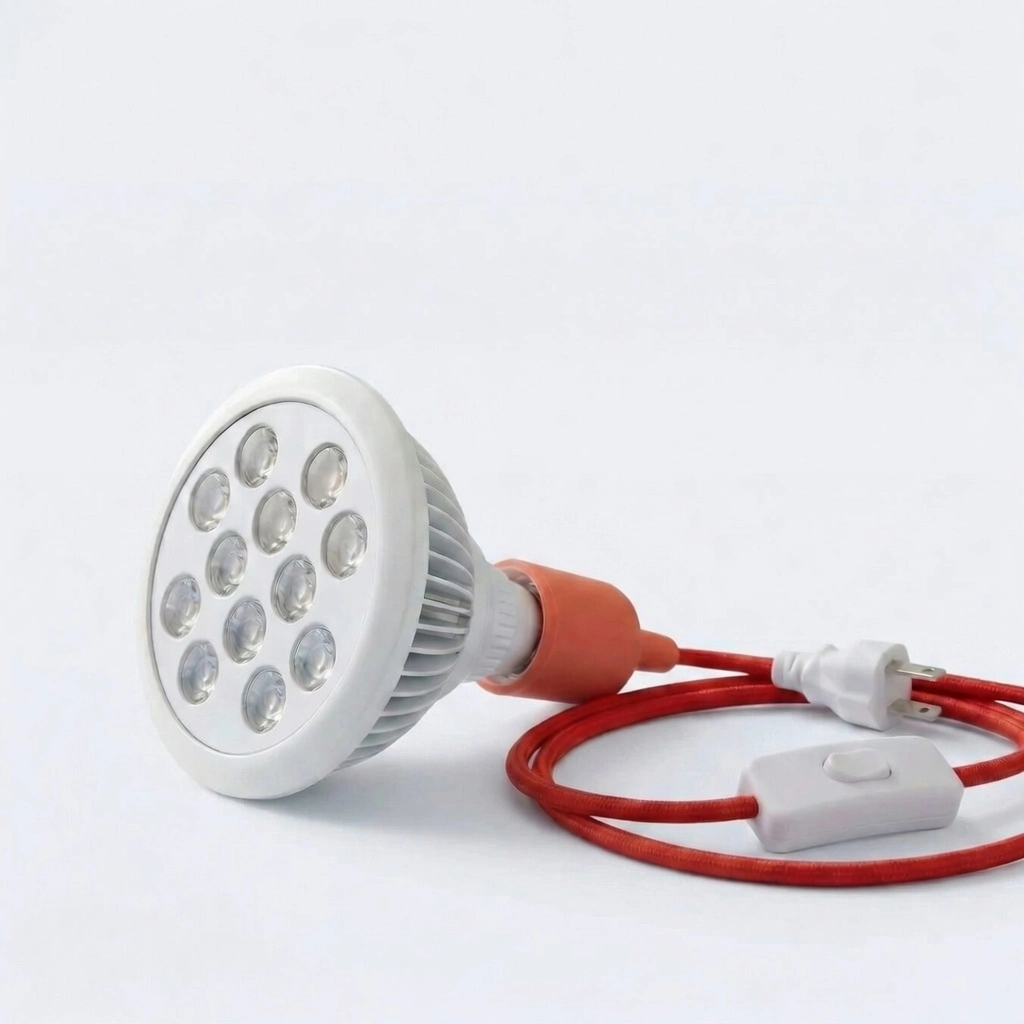
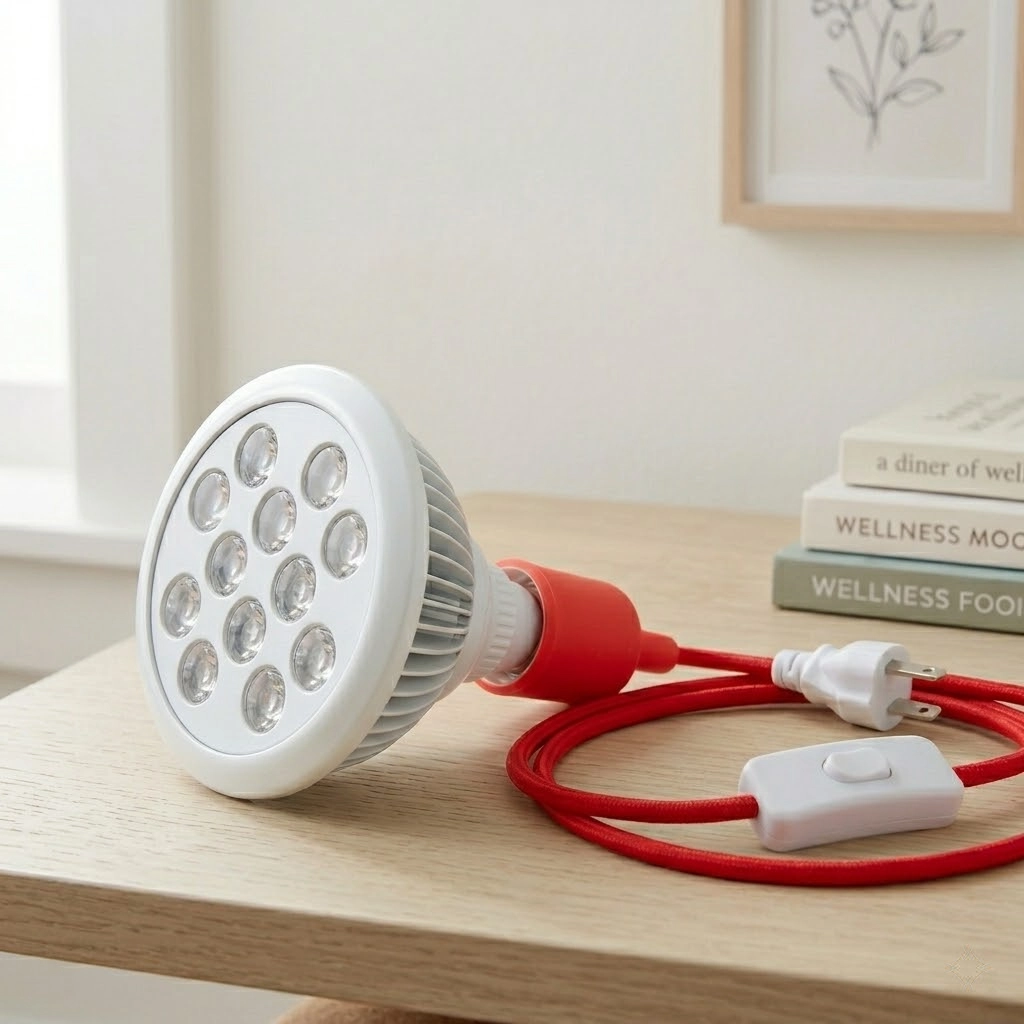
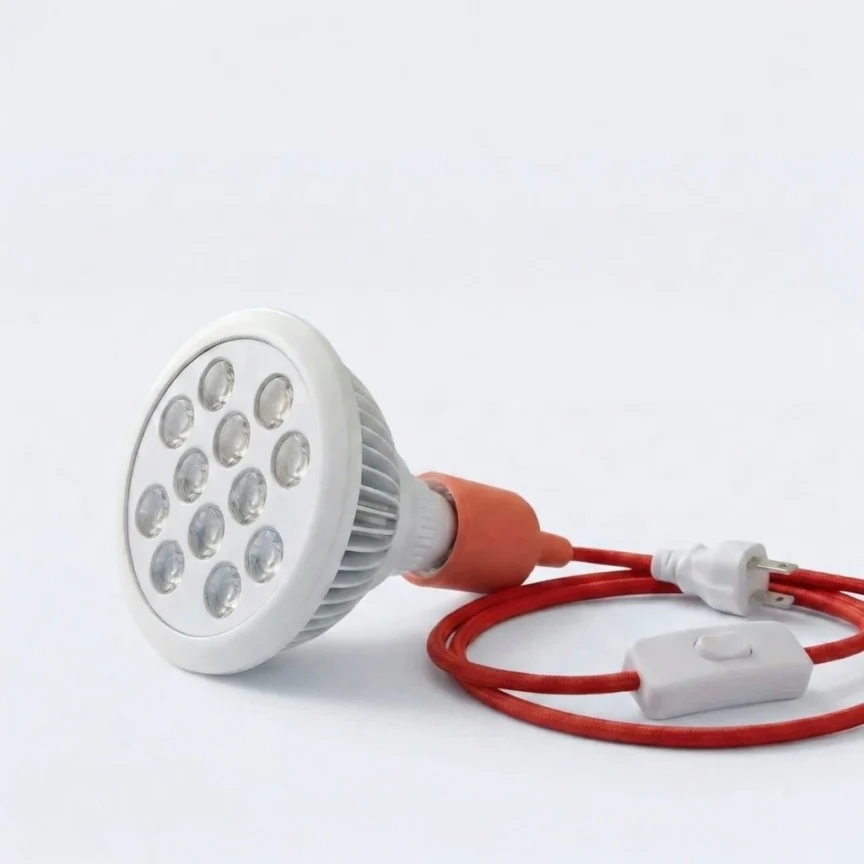
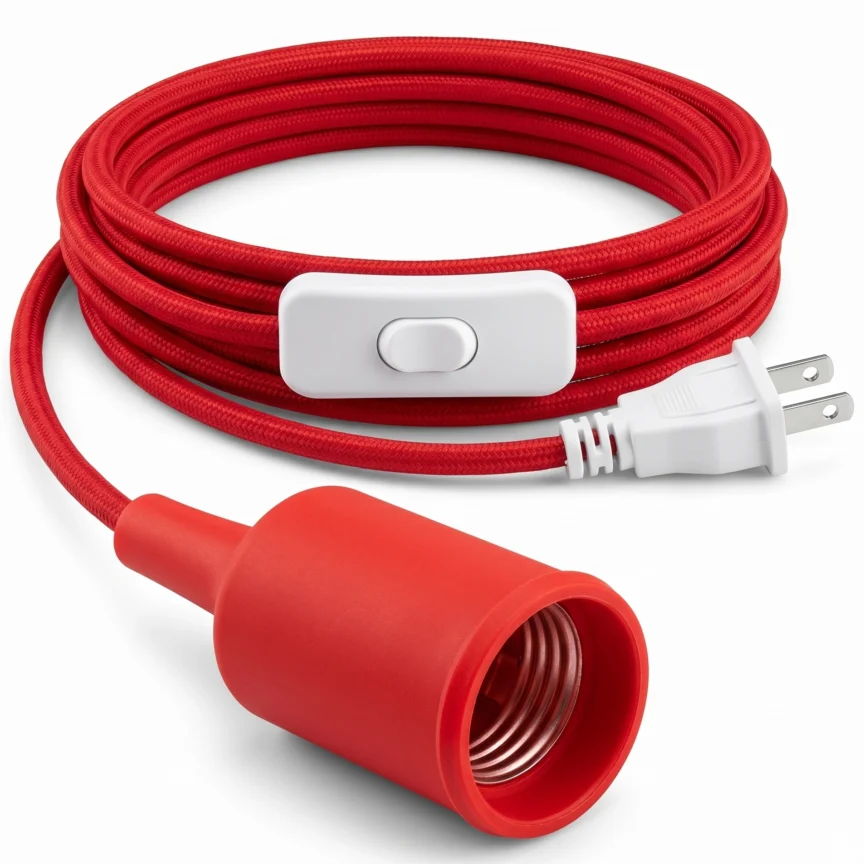
Red you can see plus infrared you feel, 660 and 850 nm in equal parts, the pairing the category is built on, with infrared that reaches farther in. Everyday energy after too many indoor hours. Warm red with no blue, for evenings. 300 mW/cm² at the lens, so sessions stay short. Quiet, worldwide voltage, fits any standard E26/E27 lamp socket, and a 6½-foot fabric cord with your choice of plug. Want orange too? See the LGS11. Only deep red? The LGS7.
Family-owned shop, real answers when you have a question. Two-year warranty. 60-day no hassle returns.