
Lactoferrin Powder vs Capsules: How to Choose and How to Start
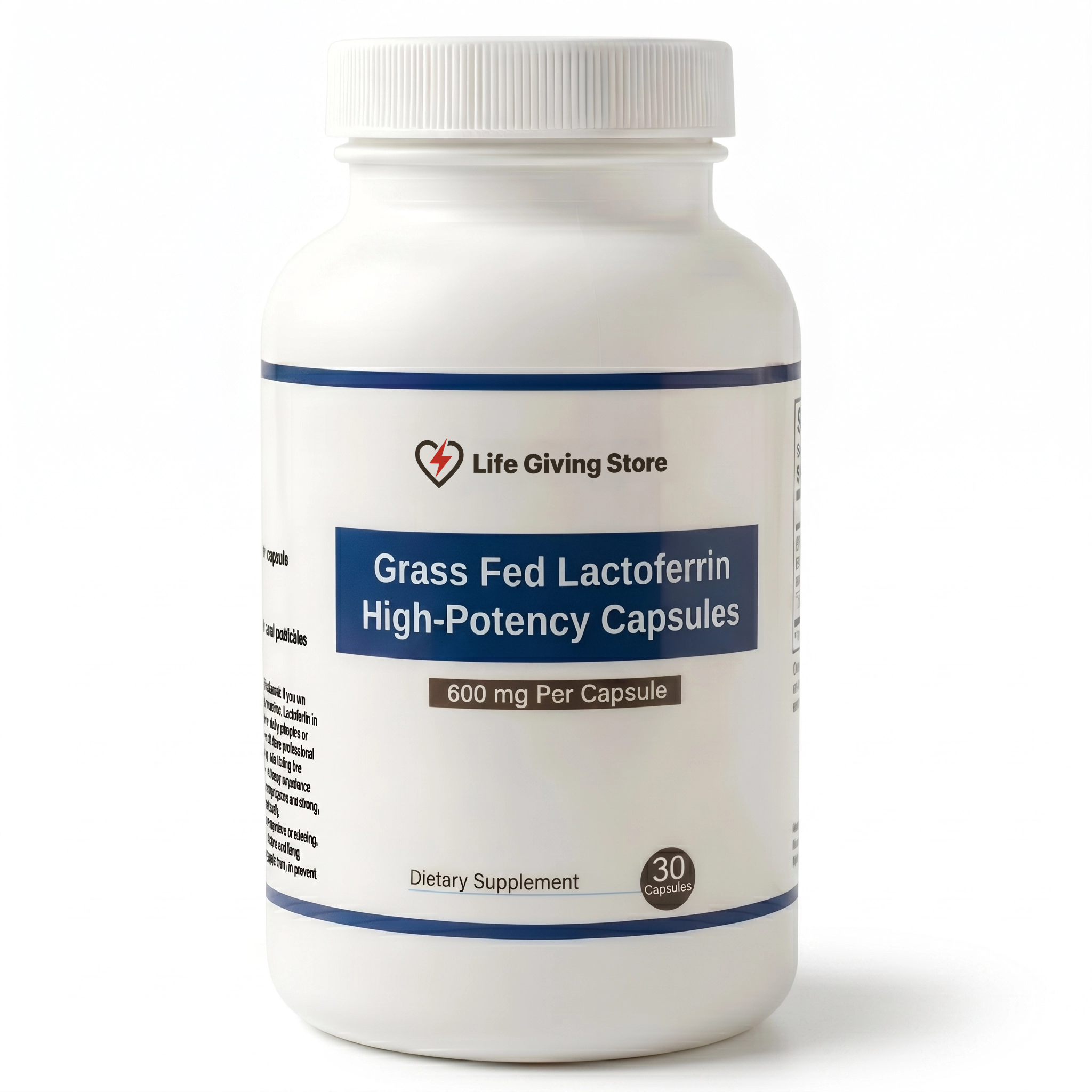
Lactoferrin is a milk protein that supports your normal immune system and healthy iron levels, backed by human studies, several of them at about 200 mg a day, close to our 240 mg powder serving. Pick lactoferrin powder if you want to start very small and build up at your own pace. Pick capsules once you’ve settled on a steady amount. Our Grass-Fed Lactoferrin comes as a powder and as 600 mg capsules. The powder is one ingredient, 95.5% active lactoferrin (typical analysis), from fresh whole milk from France. The capsules add only a bovine gelatin shell. Neither has cellulose, silica, or stearic acid.
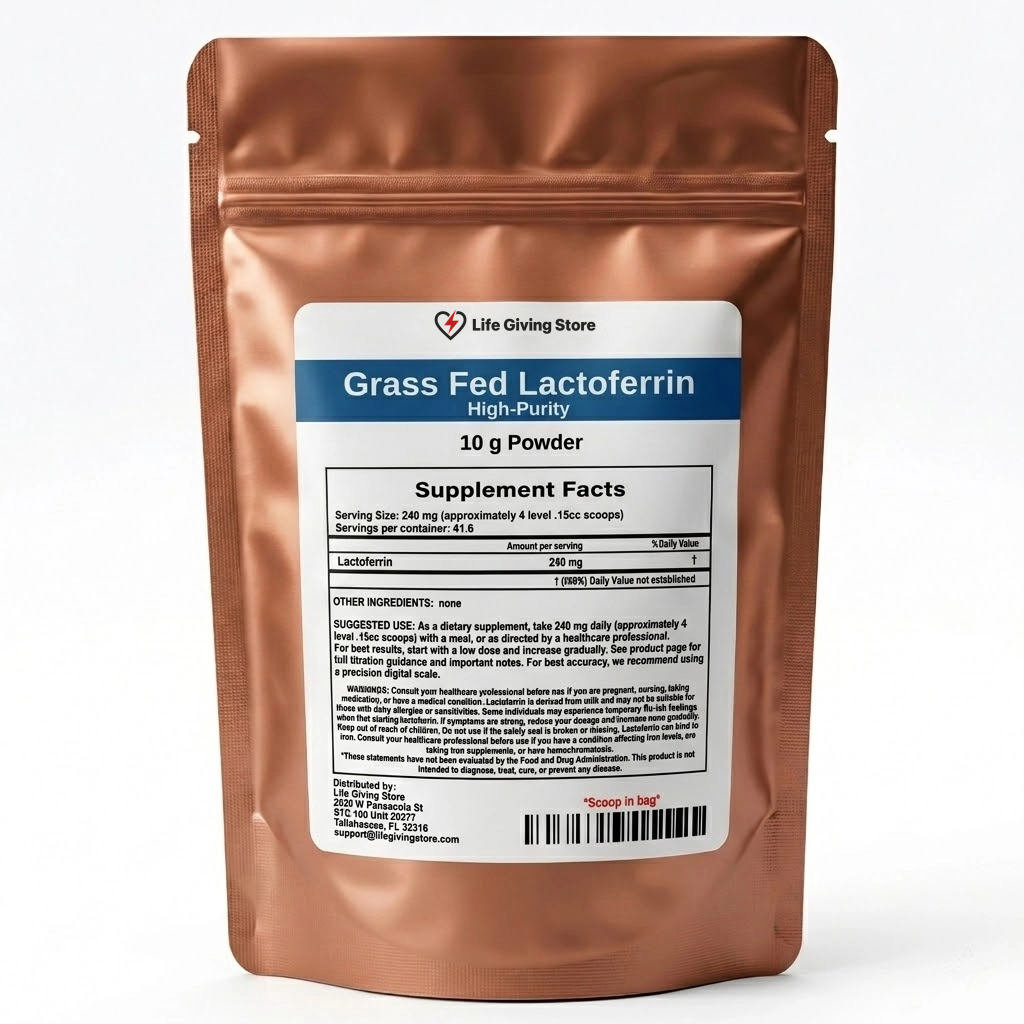
Lactoferrin powder or capsules: which should you choose?
Both forms contain the same lactoferrin. The difference is how you take it and how finely you can adjust the amount.
When is powder the better choice?
Powder is the better fit when you’re new to lactoferrin. You can start with a very small amount, about 15 mg, and raise it slowly while you notice how your stomach and energy feel. Capsules make that hard, since you can’t take less than one. Powder also mixes into a little water, applesauce, or a smoothie.
When are capsules the better choice?
Capsules are easier once you know your amount. Each High-Potency Capsule holds 600 mg, so there’s nothing to measure. They also travel well. Plenty of people start on powder at home and move to capsules when they want a bigger daily amount.
Side-by-side comparison
| Grass-Fed Lactoferrin powder | Grass-Fed Lactoferrin 600 mg capsules | Typical filler-padded capsule | |
|---|---|---|---|
| Active lactoferrin | 95.5% (typical analysis) | 95.5% (typical analysis) | Often not stated |
| Other ingredients | None | Gelatin capsule (bovine) | Cellulose, silica, stearic acid are common |
| Starting amount | About 15 mg | 600 mg per capsule | Fixed by the capsule |
| Adjusting | Tiny steps by scoop or scale | Whole capsules | Whole capsules |
| Source | Fresh whole milk from France, grass-fed cows | Same | Often not stated |
| Best for | Starting small, building up | A steady daily amount |
What should you look for on a lactoferrin label?
What does “95.5% active (typical analysis)” mean?
It means that in our typical analysis, 95.5% of the powder is active lactoferrin. Each product page links our Typical Certificate of Analysis, so you can read the numbers yourself. It’s a typical analysis, not a promise about any single batch, which is why we label it that way.

Apo vs holo lactoferrin: what’s the difference?
Lactoferrin can carry iron or not. Apo-lactoferrin is the iron-free form and holo-lactoferrin is the iron-carrying form. Some products are processed to push toward one form. Ours isn’t. It’s extracted from fresh whole milk and keeps apo- and holo-lactoferrin in their natural balance, the way they come in milk.
Why does “no fillers” matter?
If you read labels, you’ve seen cellulose, silica, and stearic acid listed under “other ingredients”. They help machines fill capsules, but they aren’t lactoferrin. Our powder is one ingredient, and the capsules add only a bovine gelatin shell. That fits a low-toxin routine, and you know exactly what you’re taking.
How much lactoferrin should you start with?
Start small. Here’s the schedule from our product page:
The powder bag includes two scoops: an orange scoop with a small side and a large side, and a white .15cc scoop.
- Week 1: about 15 mg once a day (small side of the orange scoop, heaping).
- Week 2: about 30 mg once a day (large side of the orange scoop, heaping).
- From week 3: raise the amount a little at a time toward 240 mg a day (four level .15cc white scoops), taken with a meal.

Go at your own pace, since more isn’t automatically better. Notice how you feel, including your stomach, your energy, and how steady you feel overall. Talk with your healthcare provider if you have questions about your own needs, or if something doesn’t settle.
When should you switch to 600 mg capsules?
Once you want a bigger daily amount and you’re comfortable with it, you can move from the powder to the High-Potency Capsules. Each one gives you 600 mg.
Can you measure exactly?
The scoops are a good general guide. For exact milligrams, use a precision digital scale. It’s the easiest way to repeat the same amount every day.

What the research shows
Here’s what people got in human studies of lactoferrin:
- Support for the normal immune system. Healthy adults on 200 mg a day had lower scores on a daily log of respiratory and general physical-condition symptoms, and a pooled review found better immune function in most adult studies.
- Healthy iron levels and hemoglobin. A pooled review found lactoferrin supported serum iron, ferritin, and hemoglobin, and the authors note it’s usually well tolerated in the stomach.
- A healthy inflammation balance. Adults had lower levels of one inflammation marker (IL-6).
- Comfort in dry air. Healthy adults reported less mouth and throat discomfort in a dry room.
- Gut support. A pilot study saw early shifts in gut bacteria.
Most of this research uses bovine lactoferrin, the same protein that’s in our powder. Here are the studies behind each point, starting with the biggest. We describe each one only as far as its own findings go.
Reviews that pool many studies
- Immune support and inflammation balance (systematic review and meta-analysis). Researchers pooled 25 human studies, 20 of them in adults. Immune function improved in 6 of 8 adult studies. In adults, lactoferrin lowered one marker of inflammation (IL-6), but it didn’t change two others (CRP and natural killer cell activity). The authors noted that clinical studies are still limited. (Berthon et al., 2022, Advances in Nutrition, PubMed 35481594)
- Healthy iron levels and hemoglobin (meta-analysis of human trials). In trials with people whose iron levels were low, lactoferrin did better than ferrous sulfate, a common iron supplement, at supporting serum iron, ferritin, and hemoglobin. The authors note that lactoferrin is usually well tolerated in the stomach. They think lactoferrin’s calming effect on inflammation, more than extra iron absorption, may explain it. (Zhao et al., 2022, Nutrients, PubMed 35276902)
Randomized trials in healthy adults
- Everyday immune support, 12 weeks. In a randomized, placebo-controlled trial, 157 healthy adults took 200 mg of bovine lactoferrin or a placebo daily for 12 weeks. The lactoferrin group had lower scores on a daily log of respiratory and general physical-condition symptoms, and higher activity markers on one type of immune cell (plasmacytoid dendritic cells). The authors concluded that it supports the normal immune system in healthy adults. Morinaga Milk Industry funded the study and supplied the lactoferrin. (Oda et al., 2023, Nutrients, PubMed 37764743)
- Mouth and throat comfort in dry air. In a randomized, placebo-controlled crossover trial, 34 healthy adults drank bovine lactoferrin in water or plain water, then sat in a dry room (20% humidity) for two hours. They rated their mouth and throat discomfort lower after lactoferrin. Saliva flow and salivary IgA didn’t change. Morinaga also funded this one. (Kubo et al., 2023, Nutrients, PubMed 37764816)
- Gut bacteria, pilot study. A small crossover study gave 12 healthy men 200 mg or 600 mg of bovine lactoferrin daily (standard or a microencapsulated form) for two 4-week periods. The researchers saw shifts in the make-up of gut bacteria and changes in one immune-activation marker. They called the results preliminary and said larger studies are needed. (Dix & Wright, 2018, Nutrients, PubMed 30126153)
- Tolerance at higher amounts. In a 28-day controlled trial in 66 healthy adults, one group took 3.4 g a day of bovine lactoferrin as a comparison arm. Safety measures stayed within normal ranges across groups. The study’s main focus was a different, lab-made form of lactoferrin, and it was funded by the company that makes that form. (Peterson et al., 2025, Int J Toxicol, PubMed 39465888)
How these amounts compare with ours
Several of these trials used about 200 mg a day of bovine lactoferrin, close to our full powder serving of 240 mg (four level white .15cc scoops) and below one 600 mg capsule. The pilot study also tested 600 mg, the same as one capsule. The pooled reviews covered a range of amounts. These studies used other companies’ lactoferrin, not ours.
The honest summary
These are small to mid-sized studies, and several were funded by lactoferrin makers. Together they point to support for the normal immune system, healthy iron levels and hemoglobin, comfort in dry air, and early shifts in gut bacteria. They don’t promise any particular result for you.
How lactoferrin fits a bioenergetic, low-toxin routine
In the bioenergetic view, steady energy comes from a metabolism that isn’t fighting avoidable stress. Iron is a good example. Your body needs it, but iron that’s loose instead of bound is a source of oxidative stress. Lactoferrin is an iron-binding protein: it holds iron rather than leaving it loose. That’s why people in the bioenergetic community are interested in it. It also fits the research above, which found support for healthy iron levels and hemoglobin.
The low-toxin part is simpler. The powder is one ingredient, from fresh whole milk, with no fillers or flow agents. We’ll go deeper on iron in an upcoming post on lactoferrin and iron.
Which size should you buy?
- Powder: 10 g, 40 g, 80 g, 160 g, 320 g. A small bag is a simple way to start low.
- High-Potency Capsules: 30, 60, or 120.
Not sure it’s right for you? Every order comes with 60-day no hassle returns.
Start with Grass-Fed Lactoferrin powder →
Frequently asked questions
Is lactoferrin powder or capsules better?
Neither is better. They fit different stages. Powder lets you start very small and adjust in tiny steps. The 600 mg High-Potency Capsules are easier once you’ve settled at a steady amount.
What’s in Grass-Fed Lactoferrin besides lactoferrin?
In the powder, nothing: the label lists “Other Ingredients: None.” The capsules list only a bovine gelatin capsule. Neither has cellulose, silica, or stearic acid. It’s made from fresh whole milk from grass-fed cows in France.
What is apo vs holo lactoferrin?
Apo-lactoferrin carries no iron and holo-lactoferrin carries iron. Ours isn’t processed to isolate one form, so both stay in their natural balance, the way they come in milk.
How much lactoferrin should I take per day to start?
Start small: about 15 mg once a day in week 1, about 30 mg in week 2, then build up slowly toward 240 mg a day with a meal. A precision digital scale makes small amounts exact. Talk with your healthcare provider if you have questions about your own needs.
Is the purity tested?
Yes. The product page links our Typical Certificate of Analysis, which shows 95.5% active lactoferrin (typical analysis).
What if it isn’t right for me?
You can send it back within 60 days, no hassle.
Pairs well with: Vitamin C Powder (Quali-C) and Grass Fed Beef Thyroid powder
These statements have not been evaluated by the Food and Drug Administration. This product is not intended to diagnose, treat, cure, or prevent any disease.
