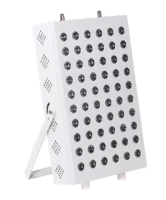
A fresh, energized feel and smoother, brighter-looking skin after a short session, with calmer evenings too.
A fresh, energized feel after a few minutes in front of it
Skin that looks smoother and brighter
Calmer evenings and more restful sleep: warm orange and red, no blue
Recovery support after workouts and long days; near-infrared reaches farther in
Made for bioenergetic living: orange, red and near-infrared, the wavelengths studied for cellular energy at cytochrome c oxidase
Four wavelengths, evenly split: 620 nm orange, 670 nm red, 760 nm and 830 nm near-infrared
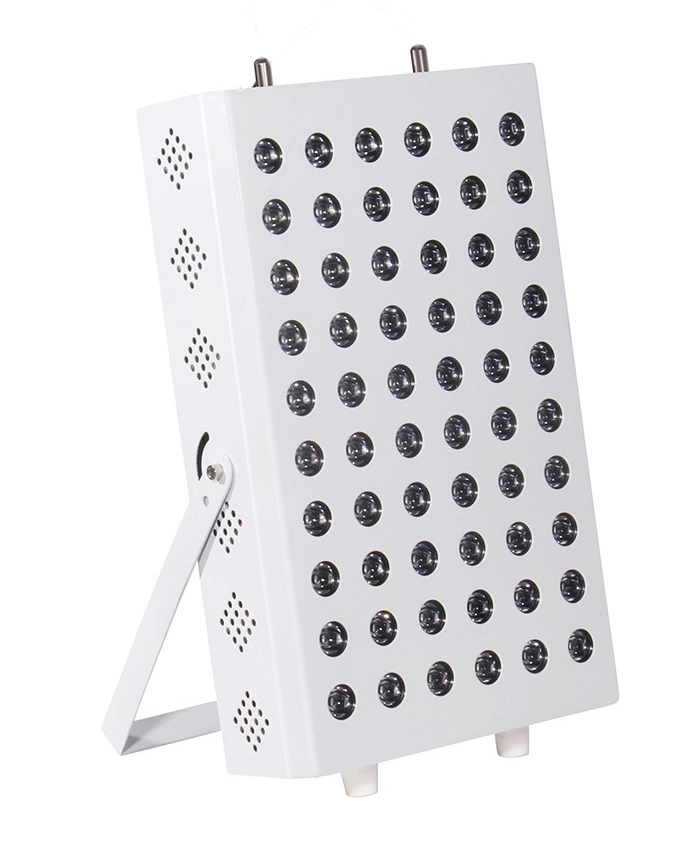
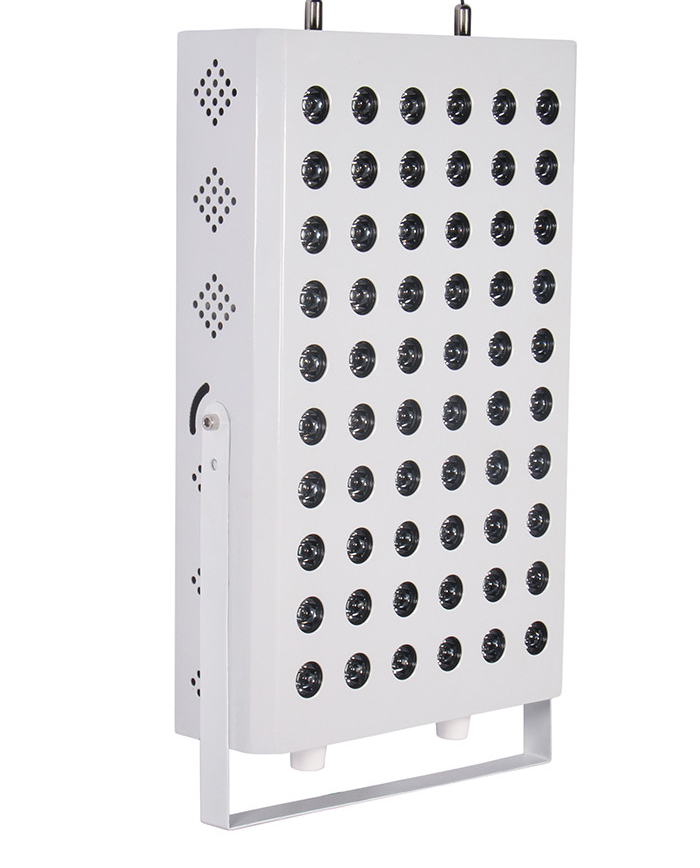
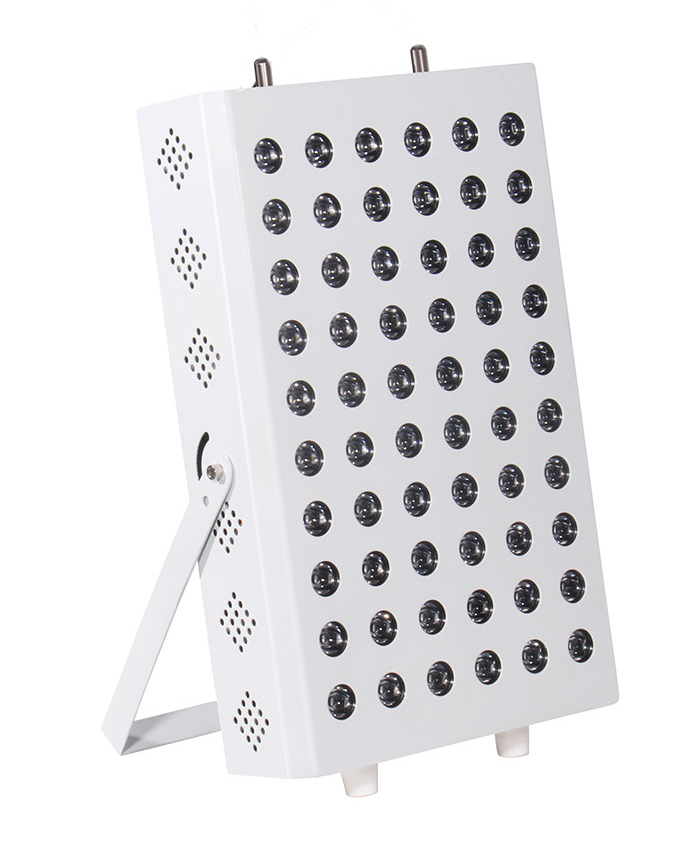
60 LEDs · 91 watts · compact, hangs on a door · works on any voltage
Goggles, hanging kit and your country’s plug in the box. Three-year warranty on the light, one year on the cord and accessories. 60-day no hassle returns.
A fresh, energized feel, smoother and brighter-looking skin, and calmer evenings, from a compact light that covers more than a handheld.
A fresh, energized feel after a few minutes in front of it.
Skin that looks smoother and brighter.
Calmer evenings and more restful sleep. Warm orange and red, with no blue.
Recovery support after workouts and long desk days.
Four wavelengths, 25% each: 620 nm orange, 670 nm red, 760 nm and 830 nm near-infrared. Most small panels give you two (660 + 850).
60 LEDs, 91 watts, worldwide voltage. 13.5″ x 8.75″ x 2.5″, compact enough to hang on a door.
Why it fits bioenergetic living. Indoor days miss the warm end of daylight. The PL11 gives you orange, red and near-infrared, each sitting inside one of the bands cells absorb for energy at cytochrome c oxidase. Like a sunny morning, minus the weather report.
As one customer put it: “Since using the PL11 I have noticed better skin and better circulation overall.”
In the box: power cord for your country, steel cable hanging kit, adjustable pulley, door hook, goggles and instructions. Three-year warranty on the light, one year on the cord and accessories. 60-day no hassle returns.
Getting started: Plug it in and flip the switch. You'll see orange and red; the infrared is invisible. It gets warm after several minutes. That's normal.
How to start: Sit about 24–36 inches away. Start low: 10–15 seconds per side, so your body can get used to it. It's powerful, so a little goes a long way.
Raising slowly: Once you're used to it, work up a little at a time. Less is more. Find what works for you.
How often: Once a day, 3–5 times a week, ideally after a healthy meal.
If it feels like too much: Skin too warm or flushed, or feeling wired? Move back, shorten the time, or skip a day. Don't overheat the skin. Talk with your healthcare provider if you're pregnant, take light-sensitizing medication, or are unsure.
Eyes: Don't shine it directly into your eyes. Eye protection is recommended; goggles are in the box.
Power density: 100 mW/cm² at 5" · 50 at 10" · 25 at 15" · 10 at 20". Closer is stronger; farther is a wider, gentler dose.
How much power? 91 watts, 60 LEDs. Accepts worldwide voltages; choose your plug at checkout (US/CA/MX, EU, UK, AU).
What's included? Custom power cord, steel cable hanging kit, adjustable pulley, door hanging hook, goggles, instruction sheet.
How big is it? 13.5" x 8.75" x 2.5".
How far away should I sit? 24–36 inches to start. See the power density in Suggested Use.
Warranty? 3 years on the light from the day it arrives, 1 year on the cord and accessories. If it stops working, email us your order number and a quick photo or video and we'll replace it.
Orange, red and near-infrared light from 620 to 830 nm is studied for skin appearance, recovery, evenings without blue, and cellular energy.
Fresher, smoother-looking skin
Red and red-to-infrared lightWunsch & Matuschka (2014). Photomedicine and Laser Surgery, 32(2), 93–100.PMID 24286286. In a controlled trial of 136 volunteers, twice-weekly sessions improved complexion, skin feel and ultrasound-measured collagen density compared with controls.
Red plus 830 nm, split-face trialLee et al. (2007). Journal of Photochemistry and Photobiology B, 88(1), 51–67.PMID 17566756. Lit sides showed smoother-looking skin and better elasticity readings than sham.
Recovery support
Red and infrared around exerciseLeal-Junior et al. (2015). Lasers in Medical Science, 30(2), 925–939.PMID 24249354. A meta-analysis found better performance and better markers of exercise recovery than placebo.
Wind-down friendly: no blue
Blue is the strong melatonin suppressorBrainard et al. (2001). Journal of Neuroscience, 21(16), 6405–6412.PMID 11487664. Longer, warmer wavelengths suppress melatonin far less than blue.
Red light and evening melatoninHo Mien et al. (2014). PLOS ONE, 9(5), e96532.PMID 24797245. Red light near 631 nm did not suppress melatonin in that protocol.
Everyday energy (cellular energy)
Four bands, four wavelengthsKaru & Kolyakov (2005). Photomedicine and Laser Surgery, 23(4), 355–361.PMID 16144476. Cell action spectra peak in four bands; the PL11's 620, 670, 760 and 830 nm each sit inside one.
670 and 830 led the packWong-Riley et al. (2005). Journal of Biological Chemistry, 280(6), 4761–4771.PMID 15557336. Of five wavelengths tested on cells, 670 and 830 nm did the most to restore cytochrome oxidase activity and ATP.
Bioenergetic & low-toxin perspective
Ray Peat wrote often about red light and cellular energy.
"Red and orange wavelengths penetrate tissue very effectively, because of their weaker absorption by water, allowing them to react with pigments in the cell, such as cytochrome oxidase, which is activated (or re-activated) by red light, increasing the production of ATP." — Ray Peat, "Cataracts: water, energy, light, and aging" (https://raypeat.com/articles/articles/cataracts-water-energy-light-aging.shtml)
"By the 1960s, several studies had been published showing the inhibition of respiratory enzymes by blue light, and their activation by red light." — Ray Peat, "Aging Eyes, Infant Eyes, and Excitable Tissues" (https://raypeat.com/articles/articles/aging-eyes.shtml)
A study Peat cited in "Aging Eyes, Infant Eyes, and Excitable Tissues":
Chen E (1993). Inhibition of cytochrome oxidase and blue-light damage in rat retina. Graefes Arch Clin Exp Ophthalmol 231(7):416-23. PMID 8406068. Blue light slowed cytochrome oxidase, the same enzyme red light supports. One reason the PL11 has no blue.
Note: These papers study wavelengths and mechanisms, not this exact light. Individual experiences vary. This information is for educational purposes only and is not intended to diagnose, treat, cure, or prevent any disease.
A fresh, energized feel, better-looking skin and calmer evenings, from a four-wavelength light sold by people who answer.
Four wavelengths across orange, red and near-infrared, 25% each.
60 LEDs, 91 watts, compact enough for a door.
Everything to hang it plus goggles, in the box.
"Customer service is awesome," says one buyer.
A family-owned shop for bioenergetic, low-toxin living.
Three-year warranty on the light, one year on the cord and accessories.
60-day no hassle returns. If your light stops working, email us your order number and a quick photo or video and we'll replace it.
I was hoping for something to help me with my SAD that happens every fall/winter. This is perfect. It takes about 15 or so minutes every other day just sitting in front of the lightbox. I'm sleeping better and I feel better. It is perfect for me. Thank you oh so much.
Mon Nov 16 2020 00:11:29 GMT+0000 (Coordinated Universal Time)