Steady energy from your food and clear-headed days, with pure thiamine you can dose your way.
- Energy from your food. Thiamine is the B vitamin your body uses to turn carbohydrates into fuel.
- Steady, clear-headed days.
- Helps your body use protein and fat, not just carbs.
- Normal nerve function support.
Why it fits bioenergetic living. Eating for energy often means fruit, sugar, milk and other carbs. Thiamine is what helps your cells burn that fuel instead of stalling. A powder lets you fine-tune exactly how much you take.
What you get:
- USP-grade thiamine HCl, sourced from Germany. Other ingredients: none.
- Powder with a scoop. Go smaller or larger than a capsule allows, and a bag lasts a long time.
- 50 g, 200 g or 500 g.
"High quality - easily dissolves under my tongue," one customer writes. Another: "Been using the B1 and feeling great."
Prefer not to measure? The 500 mg capsules are the same thiamine in a vegetable capsule. 60-day no hassle returns.
How to start: 100 mg (1 heaping .15cc scoop) once a day with a meal.
Raising slowly: If you want more, move to 100 mg twice a day (the label range) after a week or two.
If it doesn't sit right: Upset stomach or feeling off? Take it with a bigger meal or ease back, and talk with your healthcare provider.
Bitter on its own — under the tongue, in water, or in juice all work. For an exact amount, use a precision digital scale. Store cool, dark, dry.
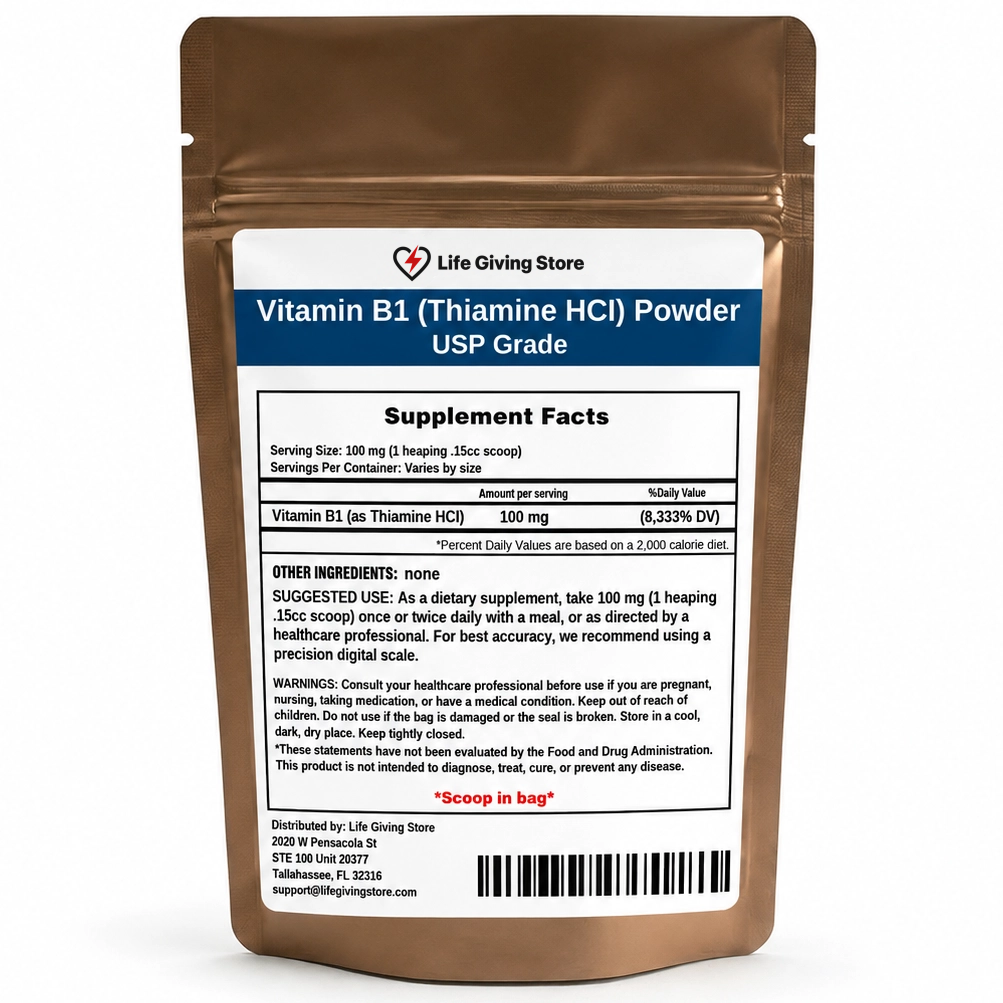
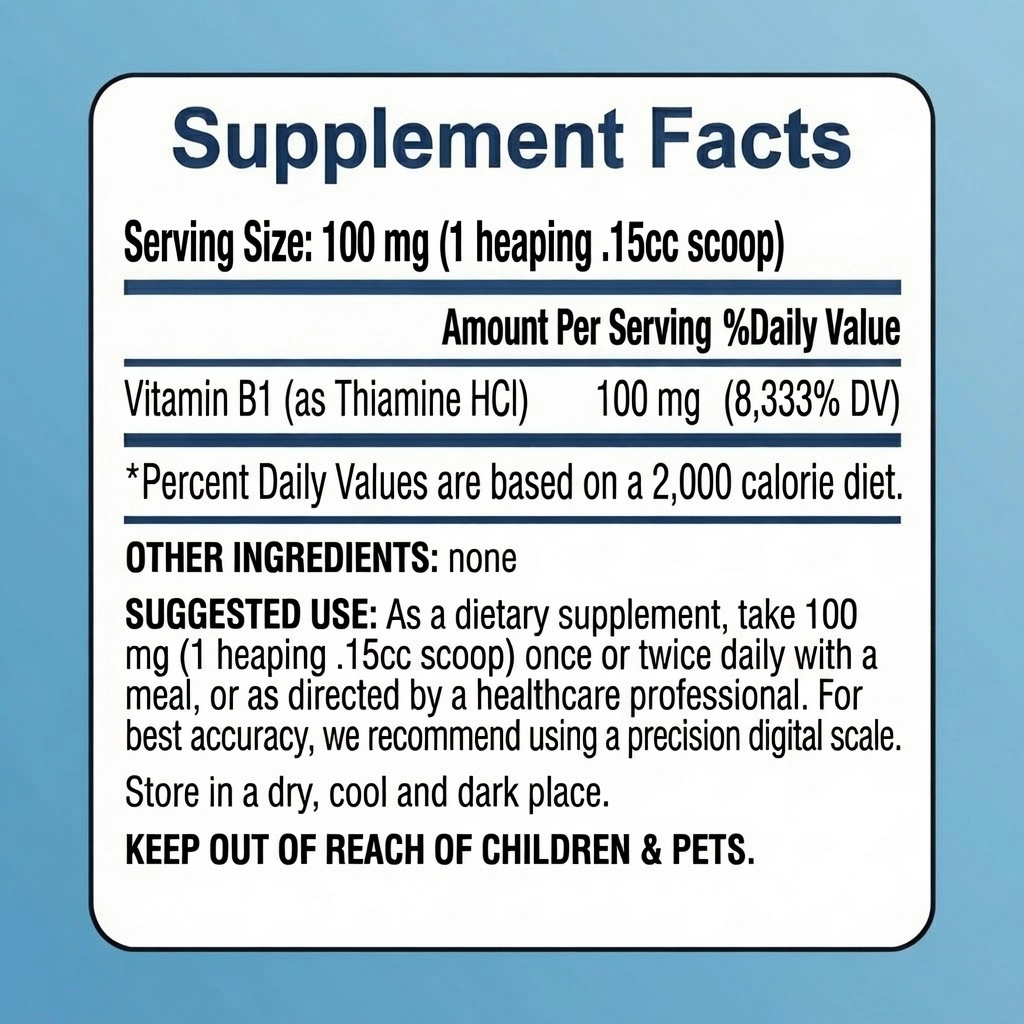
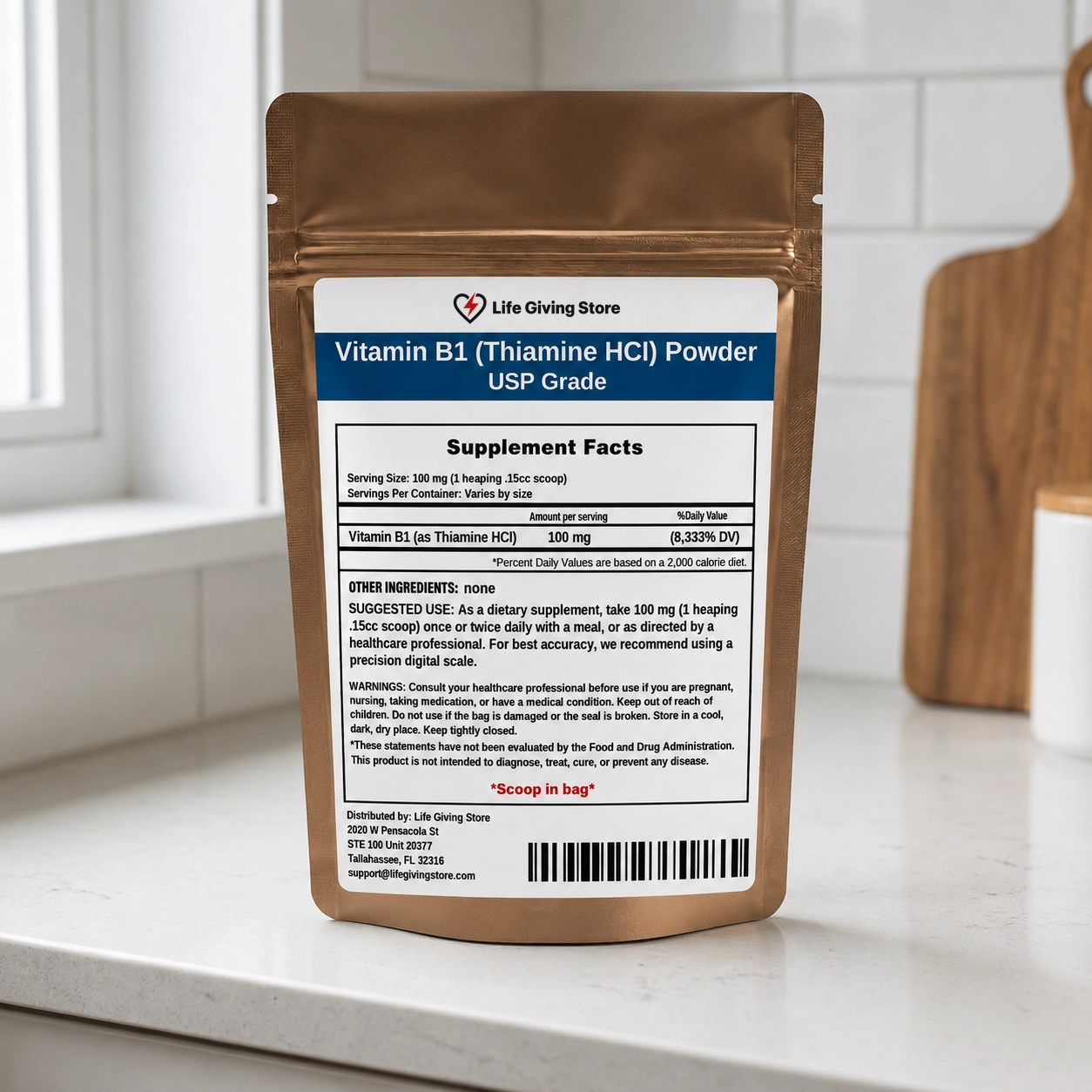
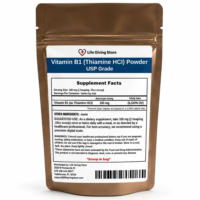
Vitamin B1 (as Thiamine HCl)
Other Ingredients: None
This is a pure, single-ingredient product with no fillers or additives.
Serving Size: 100 mg (1 heaping .15cc scoop)
Servings Per Container: 500 (50 g) | 2,000 (200 g) | 5,000 (500 g)
Amount Per Serving:
Vitamin B1 (as Thiamine HCl) — 100 mg (8,333% DV)
*Percent Daily Values are based on a 2,000 calorie diet.
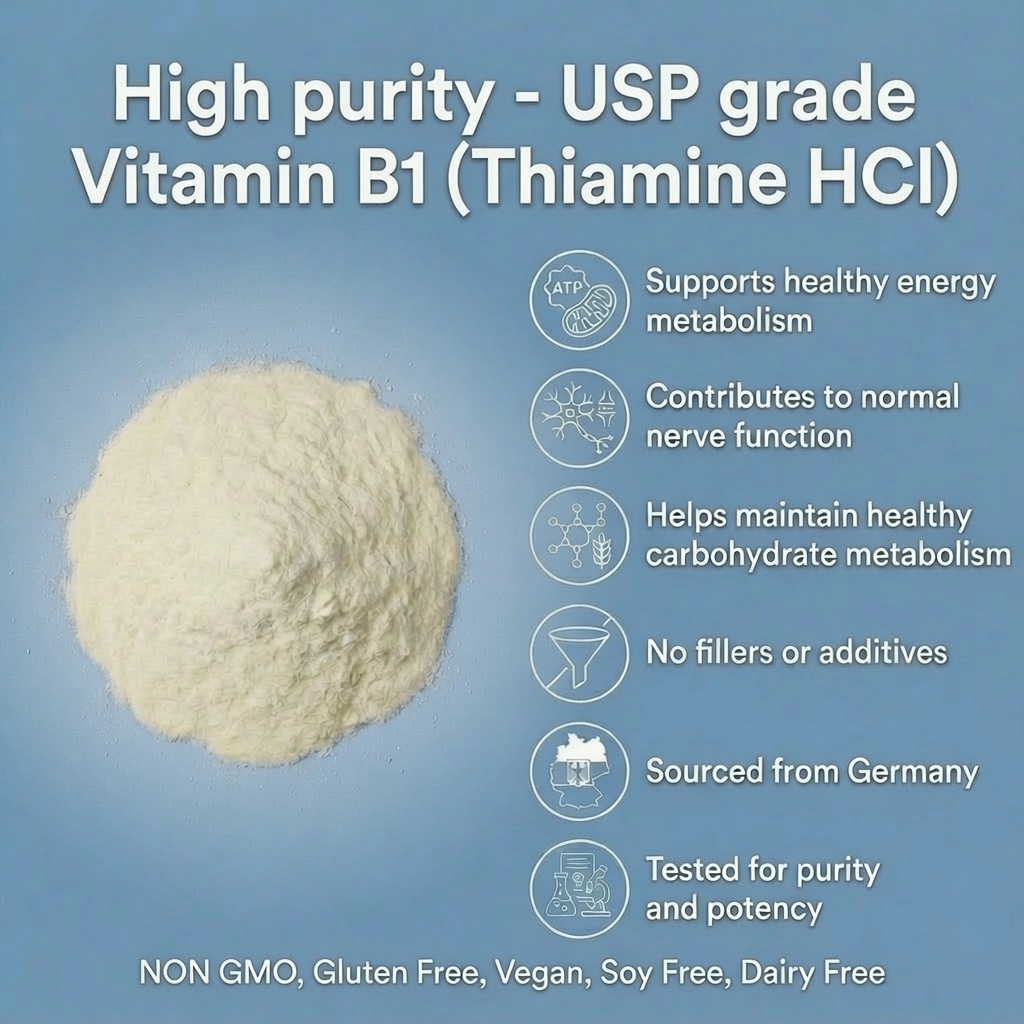
• USP Grade
• Sourced from Germany
• Tested for purity and potency
• Ultra-pure with no fillers or additives
• Packaged in a resealable bag with scoop included
How much per scoop? 100 mg vitamin B1 (as thiamine HCl), 8,333% DV. 500 servings (50 g) · 2,000 servings (200 g) · 5,000 servings (500 g).
Is it bitter? Yes. Mix into juice if straight under the tongue isn't your thing.
Powder or capsules? Same USP thiamine. Powder is flexible; capsules are 500 mg each.
What else is in it? Nothing.
Thiamine and energy from food
Thiamine is a required cofactor in the steps that turn carbohydrate into usable energy. These studies cover thiamine in general, not this exact product.
Lonsdale D (2006). A review of the biochemistry, metabolism and clinical benefits of thiamin(e) and its derivatives. Evid Based Complement Alternat Med 3(1):49-59. PMID 16550223.
Manzetti S, Zhang J, van der Spoel D (2014). Thiamin function, metabolism, uptake, and transport. Biochemistry 53(5):821-35. PMID 24460461.
How thiamine is absorbed, carried and used in energy pathways.
Kennedy DO (2016). B Vitamins and the Brain: Mechanisms, Dose and Efficacy--A Review. Nutrients 8(2):68. PMID 26828517.
Why the brain, a heavy user of glucose, relies on B vitamins like thiamine.
Smithline HA, Donnino M, Greenblatt DJ (2012). Pharmacokinetics of high-dose oral thiamine hydrochloride in healthy subjects. BMC Clin Pharmacol 12:4. PMID 22305197.
Higher oral doses of thiamine HCl (the form we sell) raised blood thiamine levels further in healthy adults.
Bioenergetic & low-toxin perspective
Ray Peat put thiamine on his short list of the nutrients closest to cellular energy.
"Riboflavin, coenzyme Q10, vitamin K, niacinamide, thiamine, and selenium are the nutrients that most directly relate to mitochondrial energy production." — Ray Peat, "Rosacea, inflammation, and aging: The inefficiency of stress" (https://raypeat.com/articles/articles/rosacea-inflammation-aging.shtml)
A study Peat cited in "Vegetables, etc.—Who Defines Food?" (https://raypeat.com/articles/articles/vegetables.shtml): Meyer P (1989). Thiaminase activities and thiamine content of Pteridium aquilinum, Equisetum ramosissimum, Malva parviflora, Pennisetum clandestinum and Medicago sativa. Onderstepoort J Vet Res 56(2):145-6. PMID 2748137. Some plants carry enzymes (thiaminases) that break thiamine down, one reason a clean, direct source is useful.
This information is for educational purposes only and is not intended to diagnose, treat, cure, or prevent any disease.
Consult your healthcare professional before use if you are pregnant, nursing, taking medication, or have a medical condition. Keep out of reach of children. Do not use if the bag is damaged or the seal is broken.
Store in a cool, dark, dry place. Keep tightly closed. Protect from heat.
*Statements made on this website have not been evaluated by the Food and Drug Administration. This product is not intended to diagnose, treat, cure, or prevent any disease.
Steady energy from your food and clear-headed days are why people take B1. Here's why they buy it from us:
- USP-grade thiamine HCl from Germany, with nothing else in the bag.
- Scoop included, in 50 g, 200 g or 500 g.
- A shop built for low-toxin, bioenergetic living, with real people who answer questions.
- 60-day no hassle returns.