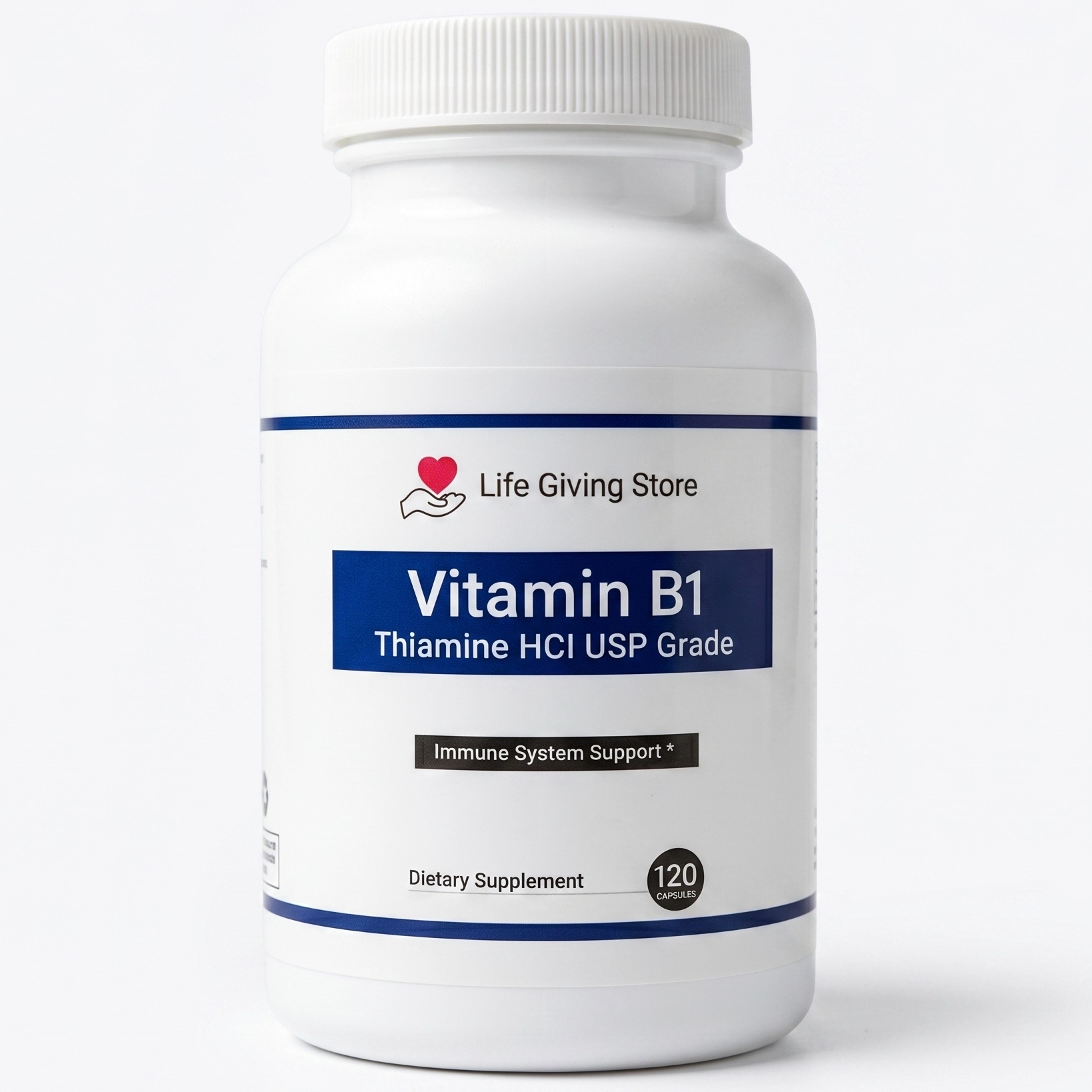
Vitamin B1 (Thiamine HCl) is a high-potency B vitamin provided in convenient 500 mg capsules. Thiamine is an essential nutrient that plays a central role in energy metabolism, helping the body convert carbohydrates into usable energy.
Each capsule delivers 500 mg of USP-grade Thiamine HCl, sourced from Germany. The capsules are made with high-quality beef gelatin and filled in the USA.
Vitamin B1 is commonly used to support healthy energy levels, normal nerve function, and overall metabolic health.
As a dietary supplement, take 1 capsule daily with a meal, or as directed by a healthcare professional. Individual needs may vary.
Vitamin B1 (Thiamine HCl) – 500 mg per capsule
Other Ingredients: High-quality beef gelatin capsule
Serving Size: 1 capsule
Servings Per Container: 120
Amount Per Serving:
Vitamin B1 (as Thiamine HCl) — 500 mg (41,667% DV)
*Percent Daily Values are based on a 2,000 calorie diet.
• USP Grade
• Sourced from Germany
• Tested for purity and potency
• High-quality beef gelatin capsules
• Filled and packaged in the USA
• Contains no fillers or additives
Vitamin B1 (Thiamine) is an essential water-soluble vitamin that serves as a critical cofactor in multiple enzymatic reactions involved in energy metabolism.
Key Research Findings:
- Thiamine and energy metabolism
Lonsdale, D. (2006). A review of the biochemistry, metabolism and clinical benefits of thiamin(e) and its derivatives. Evidence-Based Complementary and Alternative Medicine, 3(1), 49–59.
Thiamine is essential for the conversion of carbohydrates into energy through its role in the pyruvate dehydrogenase complex and the Krebs cycle.
- Thiamine and nerve function
Butterworth, R.F. (2003). Thiamin deficiency and brain disorders. Nutrition Research Reviews, 16(2), 277–284.
Research has established thiamine’s critical role in maintaining normal nerve function and protecting against neurological damage.
- Thiamine and reduction of lactic acid
Lonsdale, D. & Shamberger, R.J. (1980). Red cell transketolase as an indicator of nutritional deficiency. American Journal of Clinical Nutrition, 33(2), 205–211.
Thiamine deficiency is associated with elevated lactic acid levels; supplementation helps restore normal carbohydrate metabolism.
- Thiamine and cognitive function / brain fog
Benton, D. et al. (1995). The impact of vitamin supplementation on cognitive function in the elderly. Psychopharmacology, 117(3), 298–305.
Studies have shown that thiamine status can influence cognitive performance and mental clarity.
- Thiamine and fatigue
Costantini, A. & Pala, M.I. (2013). Thiamine and fatigue in inflammatory bowel diseases: an open-label pilot study. Journal of Alternative and Complementary Medicine, 19(8), 704–708.
Research has explored thiamine’s potential role in reducing fatigue in certain populations.
- Thiamine and mitochondrial function
Depeint, F. et al. (2006). Mitochondrial function and toxicity: role of the B vitamin family on mitochondrial energy metabolism. Chemico-Biological Interactions, 163(1-2), 94–112.
Thiamine is essential for normal mitochondrial energy production.
Metabolic Research Perspectives:
Within bioenergetic and metabolic research traditions, thiamine is recognized as a foundational nutrient for cellular energy production. It serves as a critical cofactor in the conversion of carbohydrates into usable energy and helps protect against the accumulation of lactic acid under metabolic stress. Its role in supporting mitochondrial function and maintaining healthy nerve transmission is often emphasized, particularly in contexts where energy demands are high or carbohydrate metabolism is challenged.
Note: This information is for educational purposes only and is not intended to diagnose, treat, cure, or prevent any disease.
Consult your healthcare professional before use if you are pregnant, nursing, taking medication, or have a medical condition. Keep out of reach of children. Do not use if the safety seal is broken or missing.
*Statements made on this website have not been evaluated by the Food and Drug Administration. This product is not intended to diagnose, treat, cure, or prevent any disease.